LOPEC 2026: Smart Windows in the spotlight
LOPEC 2026 in Munich delivered high-quality conversations, strong technology interest, and a clear signal that Smart Windows are moving fast from “future concept” to real industrial adoption, especially in the automotive field.
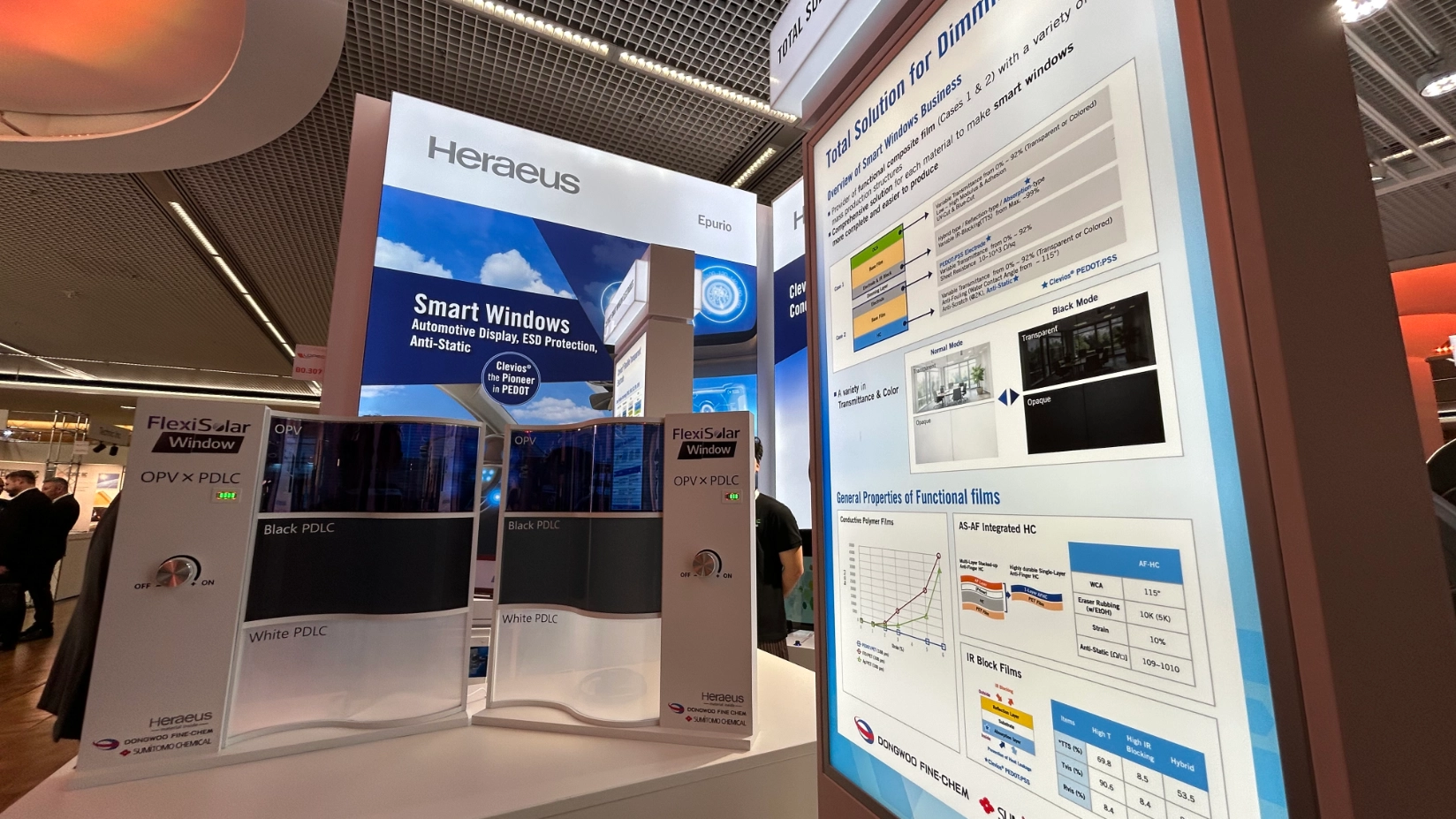
Smart Windows are moving fast from concept to real industrial adoption
Smart Windows are changing how glass behaves, and how people experience it. By applying voltage, light transmission can be actively controlled, shifting from crystal-clear transparency to strong darkening. That opens major benefits:
- Thermal and energy management (buildings and mobility)
- Comfort and privacy on demand
- New design freedom for curved and panoramic glass
Behind every Smart Window is a critical building block: the transparent electrode film. While Indium Tin Oxide (ITO) has been the traditional standard, it can struggle when flexibility, durability, and 3D form factors are required. This is where Clevios® PEDOT:PSS shines—enabling robust, low-reflection, flexible transparent electrodes suitable for next-generation concepts.
Proven demonstrators—and a new head-turner
We brought back the same winning portfolio of Smart Windows demonstrators that we first showed at C-Touch in Shenzhen in October 2025—fully functional units showcasing Clevios® combined with different electro-optical approaches (including PDLC, SPD and more). These demos continue to be a powerful way to make performance tangible instantly.
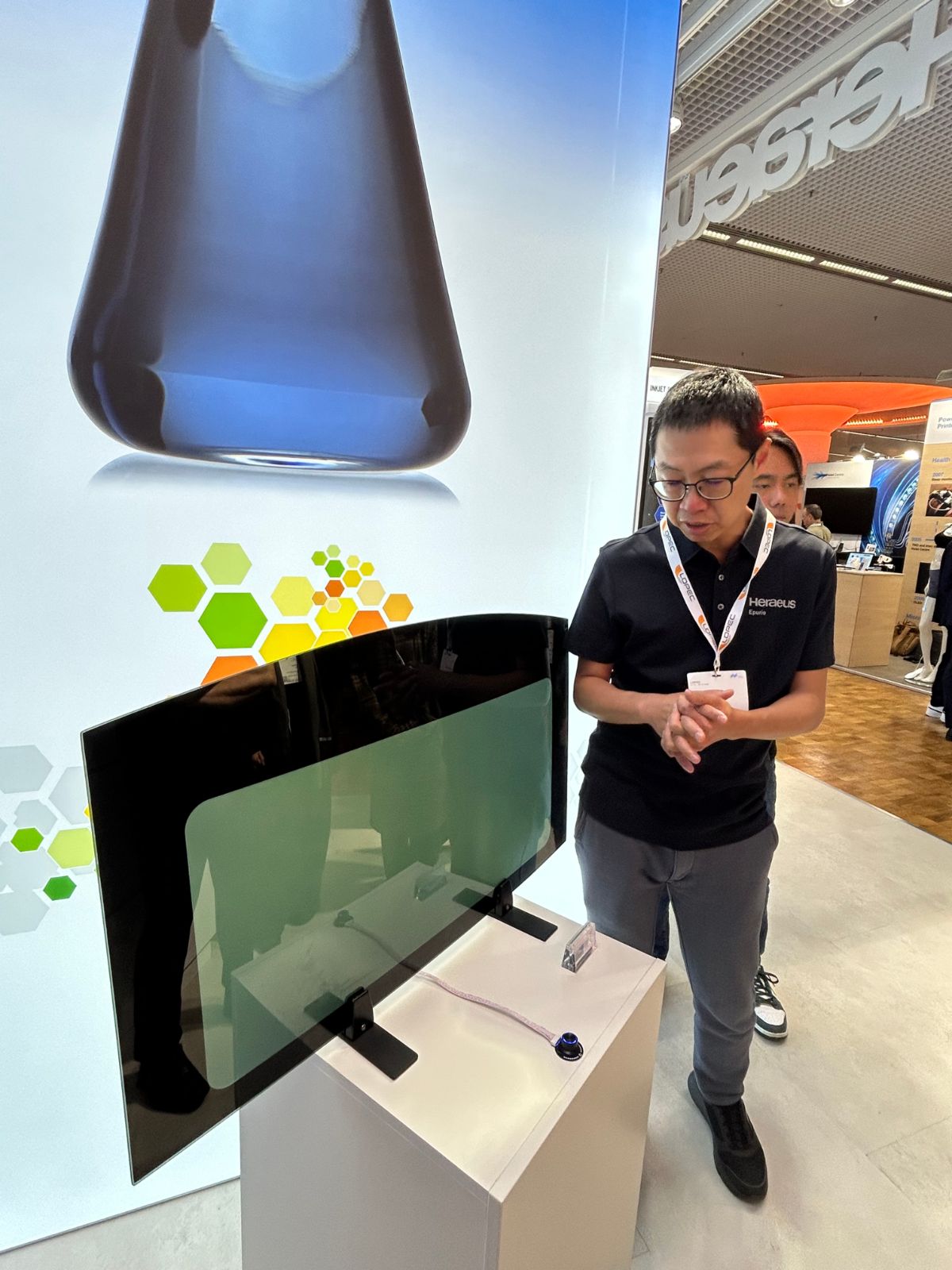
At LOPEC, we added an exciting new highlight: a dimmable automotive sunroof demonstrator from Astrace, which was a strong, highly relevant addition that sparked plenty of hands-on discussion around integration, scale-up, and automotive readiness.
The message landed clearly: Clevios® helps unlock Smart Windows designs that are durable, aesthetically premium (low reflection), and compatible with advanced form factors.
Our thanks go to our partners Dongwoo Fine-Chem, Astrace and EOC for bringing to our booth compelling proof of Clevios® versatility.